BARBELL HACKS

Better tools.Stronger lifters.

We’re John and Ryaan. Barbell Hacks is where we build thoughtful tools for strength training.

See what we’re building
Free beta open

Strength Architect

A strength training app that brings personalized workout plans, progress tracking, and coaching intelligence together.

Here’s a real day in the app: heavier trap-bar work, higher-rep back-offs, then bodyweight accessories. Try it with a plan built around you.

Try the free beta

Free during beta. No credit card required.

Lower undulating, completed

Power & core density

Trap bar deadlift

Load climbs to 405 lb, then drops as reps go up.

  1. Set 18 reps365 lb
  2. Set 28 reps405 lb
  3. Set 310 reps335 lb
  4. Set 412 reps315 lb

3 × 10Hanging leg raise (bodyweight)

3 × 10TRX Y-raise (bodyweight)

Total sets
10
Volume
13,290 lb
Effort
7/10

John’s session, shown as logged. Your plan is built around you.
And this is the app

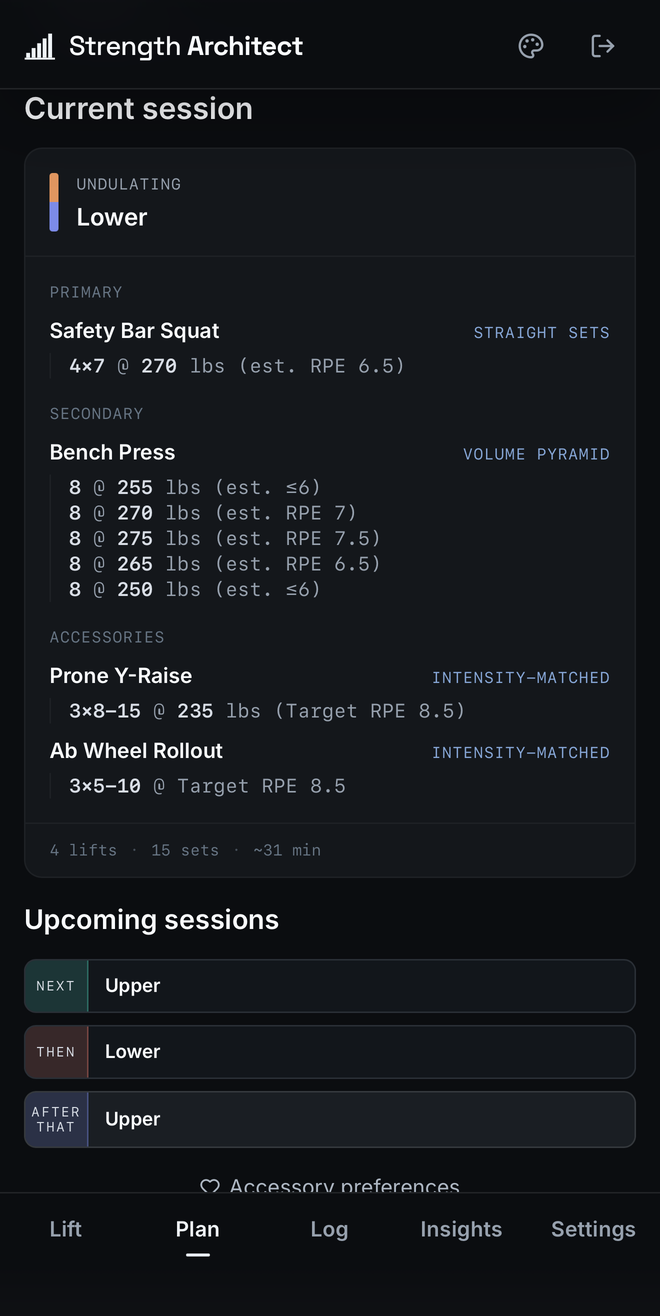
Every set arrives with its load, its reps and an expected RPE — and the scheme that chose them. Log the work and it feeds straight back into your progression.

Try the free beta
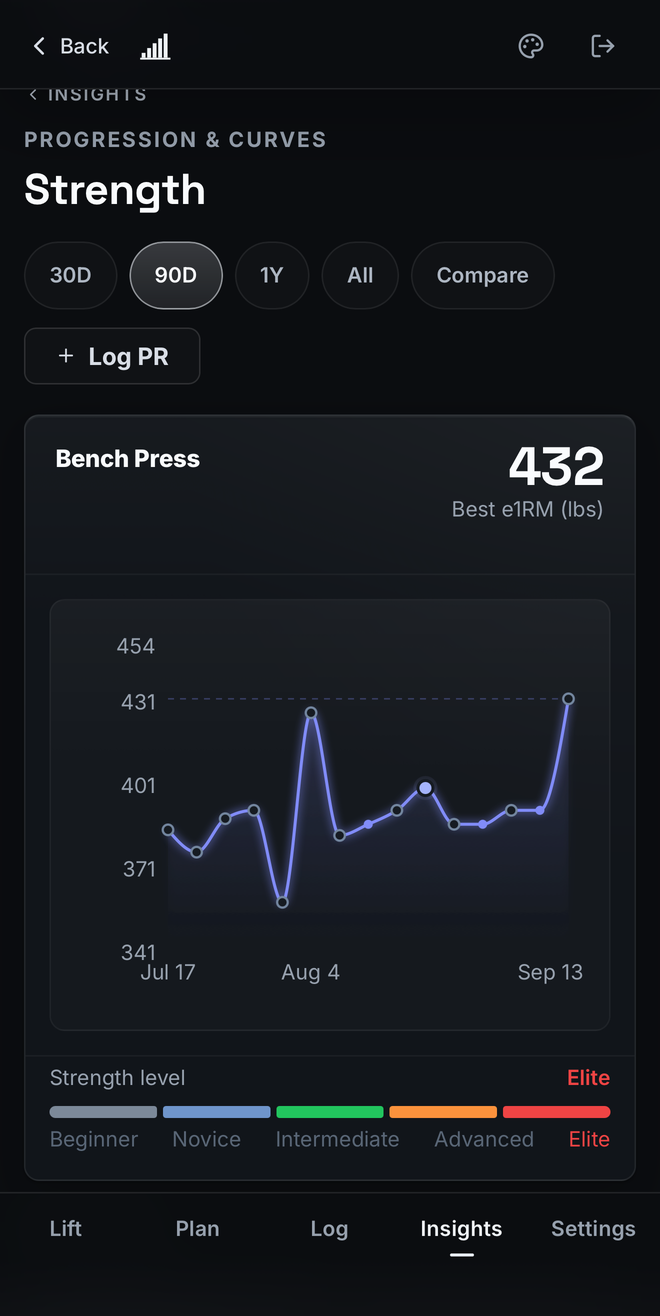
The plan screen: a lower-body session with a safety bar squat at four sets of seven, a bench press volume pyramid, and accessories, each set showing its load and expected RPE.The insights screen: ninety days of estimated one-rep max for the bench press, trending up to a best of 432 pounds.

Help shape Strength Architect

Beta testers can find access, updates, and ways to tell us what’s working or getting in the way.

Where coaching meets engineering

John Hanley

Training and product

John is the founder of Barbell Hacks and has coached athletes and lifters since 2011. He also works as a senior lidar engineering technician at Aurora, testing sensors for autonomous trucks. Strength Architect draws on his hands-on coaching, thousands of measured barbell repetitions, and a habit of testing assumptions against data. A former U.S. Coast Guard lieutenant, he builds training tools around a simple conviction: training should be individualized, quantitative, and honest about uncertainty.

Ryaan Ahmed

Engineering

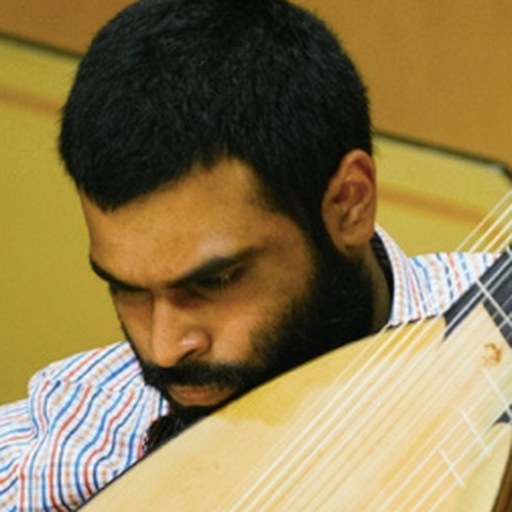
Lead engineer for Cakewalk Next at BandLab, where he writes low-latency real-time C++ for audio on consumer hardware. Cofounded Artusi, whose self-grading music theory and ear-training tools are used in conservatories and universities worldwide. Before that, senior research engineer at MIT and associate director of its Digital Humanities Lab. Harvard CS; plays lutes and conducts baroque opera when he is not shipping.

Help shape what comes next

Want to test the app or share an idea? Tell us what you’re training for and where better tools could help.

Goes straight to both of us.